
Lock Out Tag Out (LOTO) is a critical safety procedure designed to protect workers from hazardous energy sources during maintenance and servicing of machinery. Proper implementation of LOTO reduces the risk of accidental start-ups and energy release, preventing serious injuries or fatalities. This guide will walk you through the correct procedure for LOTO, ensuring compliance with workplace safety regulations in Australia.
For businesses looking for high-quality lockout devices and solutions, Locksafe offers a range of products designed to help workplaces maintain compliance and improve safety.
Why is Lock Out Tag Out Important?
LOTO is essential for industries where employees work with electrical, mechanical, hydraulic, pneumatic, or thermal energy sources. Without proper lockout procedures, unexpected energy release can lead to severe injuries, including burns, electrocution, crushing, and amputations. Australian workplace safety regulations mandate that businesses implement LOTO protocols to create a safer working environment.
By following the correct LOTO procedure, workplaces can:
✔ Prevent unexpected equipment start-ups
✔ Reduce the risk of workplace injuries
✔ Ensure compliance with safety regulations
✔ Improve overall workplace safety culture

Lock Out Tag Out (LOTO) Procedure: Step-by-Step Guide
Implementing LOTO requires a systematic approach to ensure all hazardous energy sources are effectively controlled. Below is the standard procedure for a safe and effective lockout process.
1. Identify Energy Sources
Before starting any maintenance or servicing, workers must identify all energy sources associated with the equipment. This includes:
- Electrical energy (wiring, circuits, motors)
- Mechanical energy (moving parts, springs, belts)
- Hydraulic or pneumatic energy (pressurised systems)
- Thermal energy (heat or steam)
Understanding how these energy sources interact with the machinery is crucial for an effective lockout process.
2. Notify Affected Employees
Before initiating LOTO, inform all relevant personnel about the shutdown. This includes operators, supervisors, and maintenance workers. Clear communication helps ensure that no one mistakenly attempts to start the machine during servicing.
3. Shut Down the Equipment
Turn off the machine using the standard shutdown procedure. This could involve switching off power at the control panel, pressing a stop button, or closing a valve. Always follow the manufacturer’s shutdown instructions to avoid complications.
4. Isolate the Energy Source
Once the machine is powered down, isolate the energy source by:
- Disconnecting power at the breaker or switch
- Closing valves for hydraulic or pneumatic systems
- Blocking mechanical movement using chocks or pins
For some machines, multiple energy sources may need to be isolated to ensure complete safety.
5. Apply Lockout Devices and Tags
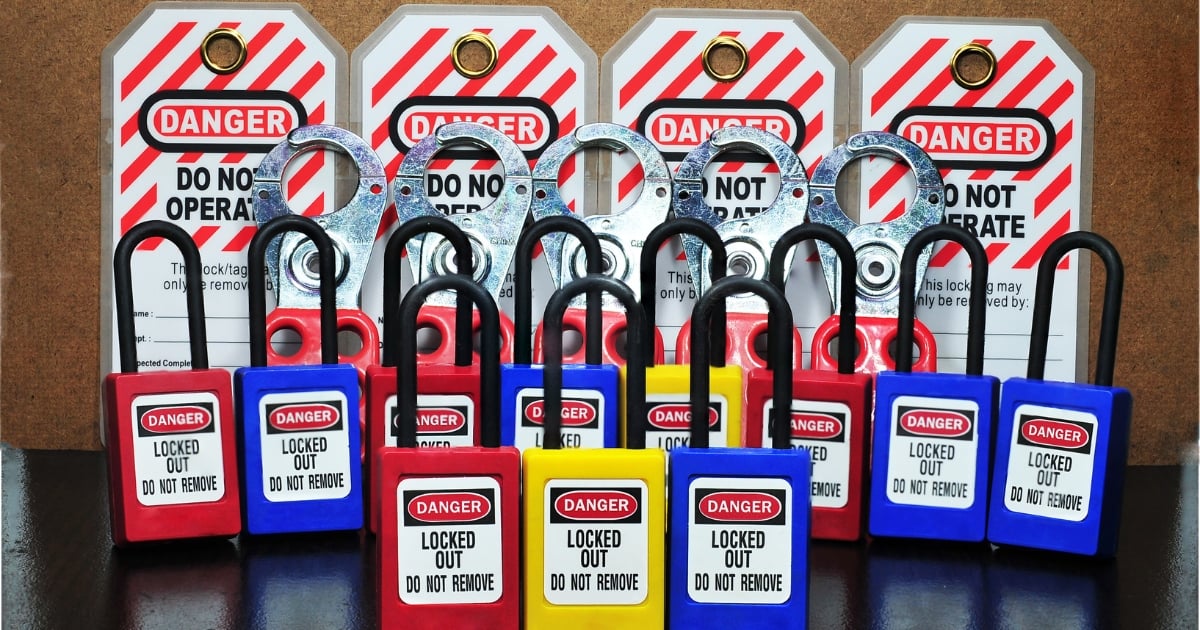
After isolating the energy source, apply a lockout device to prevent it from being re-energised. Lockout devices include padlocks, circuit breaker locks, valve locks, or other approved locking mechanisms.
Each lock should be:
- Durable and resistant to tampering
- Clearly labelled with the worker’s name
- Assigned to one person to maintain control
In addition to locks, attach a tagout warning label indicating the reason for the lockout and the person responsible for it. This provides visual notification to prevent accidental removal.
6. Release or Dissipate Stored Energy
Even after locking out the primary energy source, residual energy may remain in the system. To fully de-energise the equipment:
- Discharge capacitors in electrical systems
- Bleed off stored pressure in pneumatic or hydraulic systems
- Allow thermal energy to cool down
- Block moving parts to prevent sudden movement
Failing to remove stored energy can still result in hazards, so this step must not be overlooked.
7. Verify Lockout Effectiveness
Before beginning maintenance work, verify that the lockout process is effective. This involves:
- Attempting to turn on the machine to ensure it does not start
- Checking for any unexpected movements or leaks
- Confirming that all power sources are fully isolated
Only when the equipment is completely de-energised should maintenance or servicing begin.
8. Perform the Required Work
With the machine safely locked out, maintenance personnel can now perform their tasks. They must remain aware of their surroundings and ensure the work does not introduce new hazards.
9. Remove Lockout Devices and Restore Power
Once maintenance is complete, follow a controlled process to remove locks and re-energise the equipment:
- Inspect the equipment to ensure all tools and materials are removed.
- Confirm that all employees are in a safe position.
- Remove the lockout devices and tags. Only the worker who applied the lock should remove it.
- Gradually restore power and test the machine to ensure it is functioning correctly.
Best Practices for Effective LOTO Implementation
To strengthen your LOTO program, consider these best practices:
✔ Develop Clear Procedures – Every machine should have a documented lockout procedure outlining the specific steps for energy control.
✔ Provide Employee Training – Workers must be trained on LOTO protocols, including how to recognise hazardous energy sources and properly apply lockout devices.
✔ Use Durable Lockout Devices – Invest in high-quality locks and tags that are resistant to tampering and environmental damage.
✔ Conduct Regular Audits – Periodically review and update LOTO procedures to ensure compliance and effectiveness.
✔ Encourage a Safety Culture – Reinforce the importance of LOTO through ongoing communication, training sessions, and safety meetings.
Creating a Safer Workplace with Proper Lock Out Tag Out
Lock Out Tag Out is an essential safety procedure for any workplace managing hazardous energy. By following the correct steps—identifying energy sources, isolating power, applying locks, verifying effectiveness, and safely restoring operations—businesses can significantly reduce the risk of workplace injuries and ensure compliance with safety regulations.
Implementing a strong LOTO program helps protect workers and maintain a safe, regulated work environment. For expert guidance and high-quality lockout devices, Work Safe Lock Outs provides tailored solutions to support workplace safety. Contact us today to learn how we can help enhance your safety procedures.


