
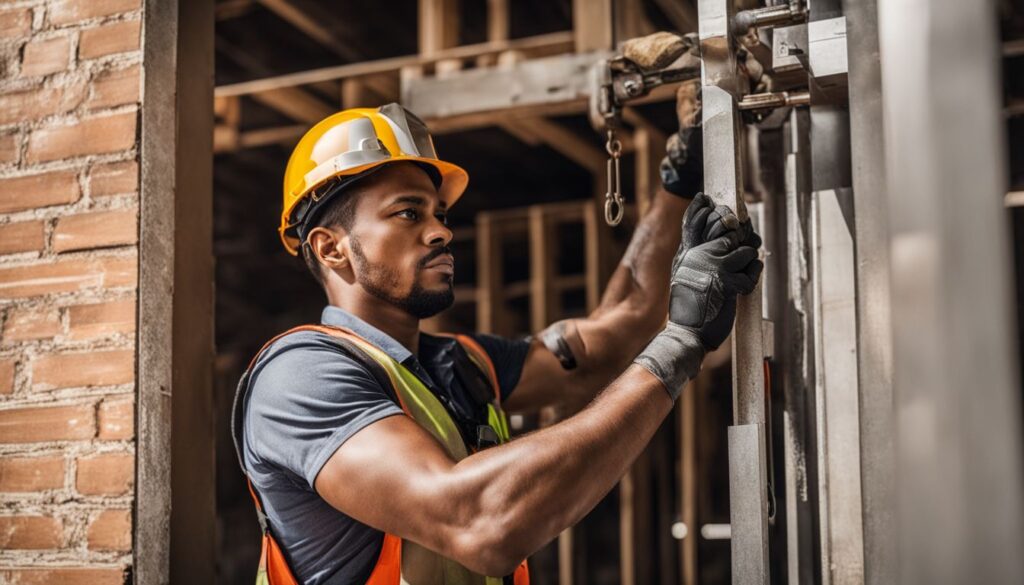
Keeping everyone safe at work isn’t just a box-ticking exercise – it’s a genuine concern for many of us. Trust us, we understand the search for effective ways to not only protect gear but also look out for our mates in the workplace.
Interestingly enough, over 30% of workplace tumbles and mishaps could be dodged with proper safety measures in place, including the savvy use of locking brackets. Our article dives into some practical uses of locking bracket safety protocols that could really beef up security at your worksite.
So, let’s all make an effort to keep our workplaces safer, together!
Understanding Locking Brackets: A Quick Overview

Locking brackets, those nifty little lifesavers, are absolutely crucial when it comes to anchoring down the fort at work. They’re like the quiet heroes of workplace safety, making sure everything from your scaffolding to your swivel chair stays right where it should be – cutting down on mishaps and keeping the gear stable.
Whether you’re in the thick of a construction site or just settling into your office cubicle, these gadgets ensure that things only move when we say so, preventing any unauthorised sliding about.
Venturing deeper into how these darlings contribute to a secure working environment really brings home their importance for peace of mind at work. It’s all about looking out for each other and sticking to those Work Health and Safety (WHS) rules that keep us ticking along nicely.
After all, ensuring everyone goes home safe at the end of the day is what it’s all about, isn’t it? Let’s dive into how compliance with WHS regulations is made heaps easier thanks to locking brackets doing their bit in safeguarding our spaces.
Locking Brackets and Workplace Security

Locking brackets play a crucial role in workplace security by ensuring employee safety and compliance with WHS regulations. They are anchored devices that offer practical applications across various settings such as construction sites, office spaces, and industrial environments while underpinning safety standards and security protocols.
Employee Safety

We prioritise the well-being of employees through implementing locking bracket safety protocols. These protocols are essential for preventing accidents and ensuring a secure work environment.
From anchoring devices to scaffold safety, our strategies cover various aspects that contribute to comprehensive workplace safety. Ensuring every team member knows how to correctly use locking mechanisms is part of our commitment to occupational health and safety.
Adhering to hazard prevention standards not only protects staff but also aligns with Workplace Health and Safety (WHS) regulations. Our focus on practical applications like battery isolation switches and furniture safety showcases our dedication to minimising risks in diverse settings.
We constantly update security protocols, reflecting the latest industrial safety practices. This ongoing effort demonstrates our resolve in safeguarding against potential workplace hazards while maintaining a safe, productive environment for all employees.
Compliance with WHS Regulations

Ensuring that our workplace meets the Work Health and Safety (WHS) Regulations isn’t just about checking boxes; it’s a fundamental aspect of running a responsible business. Our use of locking brackets plays a significant role in compliance, demonstrating our commitment to employee safety and risk prevention.
By installing these security protocols, we uphold high safety standards, aligning with legal requirements and safeguarding against potential hazards.
Our adherence to WHS regulations through effective use of locking devices showcases practical applications in maintaining workplace security. This approach not only protects our team but also minimises the possibility of costly legal issues arising from non-compliance.
We engage in regular reviews of our safety measures to ensure they meet current guidelines, keeping our focus on creating a secure working environment for everyone.
Real-world Applications of Locking Brackets

Real-world applications of locking brackets span various industries, such as construction sites, office spaces, and industrial settings. Locking brackets provide a practical solution for securing furniture and anchoring devices in these diverse environments.
Construction Sites

At construction sites, locking brackets play a critical role in ensuring workplace safety and compliance with occupational health and safety regulations. These devices secure scaffolding, machinery, and other equipment to prevent accidental movement or collapse.
We prioritise the use of locking mechanisms that meet stringent safety standards to protect our employees from potential hazards.
Implementing lockout procedures for electrical systems and battery isolation switches is another area where these safety protocols are essential. This practice safeguards workers against electrical shocks or unexpected start-ups of equipment during maintenance.
We firmly commit to adopting these security measures across all our projects, aiming for hazard prevention and risk management in line with industry best practices.
Office Spaces

Moving from the rugged demands of construction sites, office spaces present a different set of challenges for workplace safety and security protocols. Locking brackets in these environments serve crucial roles beyond simple furniture safety.
They anchor devices and equipment securely, reducing risks associated with theft or accidental displacement. This ensures compliance with occupational health and safety regulations while maintaining an orderly workspace.
We integrate locking bracket safety protocols in our daily operations to fortify workplace security further. These measures are vital for protecting sensitive information and expensive technology often found in modern offices.
Lockout procedures become part of our routine, safeguarding against electrical hazards by isolating power sources during maintenance or unforeseen incidents. Through such practical applications, we enhance overall safety standards without disrupting the productivity that drives business success in office settings.
Industrial Settings

Leaving the more controlled environments of office spaces behind, we venture into industrial settings where the stakes for workplace safety and security protocols significantly rise.
Industrial areas are bustling with heavy machinery, high-powered equipment, and complex operational procedures that demand stringent adherence to locking bracket safety protocols. We focus on ensuring these settings thrive under rigorous occupational health and safety standards, prioritising hazard prevention through reliable locking mechanisms.
Our approach in industrial venues heavily involves applying lockout procedures to prevent unauthorised access or accidental activation of machinery. This practice not only safeguards employees from potential harm but also aligns perfectly with WHS regulations.
By integrating advanced anchoring devices and scaffolding safety measures, we contribute towards establishing a safer working environment for everyone involved. Through practical applications of locking brackets in such demanding contexts, we actively reduce risk while enhancing overall workplace security.
Sustainability Initiatives in Locking Bracket Manufacturing

We’re committed to integrating sustainability into every aspect of our locking bracket manufacturing process. Recognising the critical role we play in environmental stewardship, we’ve adopted green practices that include using recycled materials in our brackets and optimising energy efficiency across operations.
Our efforts extend to waste reduction strategies where excess material from production is repurposed, minimising landfill impact and promoting a circular economy approach.
Transitioning towards renewable energy sources has significantly lowered our carbon footprint, setting new standards for industrial safety practices while adhering to stringent safety laws.
We continuously explore innovative solutions to ensure our practices not only meet current needs but also safeguard future generations. This proactive stance on sustainability illustrates our dedication to leading by example within the industry, ensuring workplace safety and environmental preservation go hand in hand.
Exploring common mistakes next can provide deeper insights into maximising the effectiveness of locking brackets within your business operations.
Common Mistakes to Avoid When Using Locking Brackets

When it comes to using locking brackets, avoiding common mistakes is crucial for maintaining workplace safety and security. Here are key mistakes to avoid:
- Neglecting Regular Inspections: Failing to conduct routine checks on locking brackets can lead to unnoticed wear and tear, compromising their effectiveness over time.
- Skipping Proper Installation: Improper installation of locking brackets can weaken their anchoring capabilities, posing serious safety risks in the event of an emergency.
- Ignoring Weight Limits: Exceeding the specified weight limits for locking brackets can cause structural strain, increasing the likelihood of accidents and injuries.
- Improper Maintenance: Neglecting scheduled maintenance tasks such as cleaning and lubrication can result in dysfunctional locking mechanisms.
- Overlooking Environmental Conditions: Failure to consider environmental factors like exposure to moisture or extreme temperatures can accelerate corrosion and reduce the lifespan of locking brackets.
- Disregarding Manufacturer Guidelines: Ignoring manufacturer recommendations for usage and application of locking brackets may compromise their reliability and safety standards.
These mistakes must be carefully avoided to ensure that locking brackets function effectively in upholding workplace safety protocols.
Maintenance and Inspection of Locking Brackets

Maintaining and inspecting locking brackets is imperative for upholding workplace safety. Regular maintenance ensures that the brackets function optimally, reducing the risk of unexpected failures.
Thorough inspections should be conducted periodically to detect any signs of wear or damage, allowing for prompt corrective action to be taken.
General Maintenance

Ensuring the upkeep of locking brackets is vital for maintaining workplace safety and security. Regular maintenance not only extends the life of these devices but also minimises the risk of accidents and hazards. Here’s a detailed guide to general maintenance:
- Inspect all locking brackets for signs of wear, rust, or damage. Replace any worn – out components promptly to maintain optimal functionality.
- Clean the locking mechanisms regularly to remove debris and ensure smooth operation. Use appropriate cleaning agents and tools recommended by the manufacturer.
- Lubricate moving parts as per the manufacturer’s guidelines to prevent friction, corrosion, and wear that could compromise their effectiveness.
- Verify that all fasteners are securely tightened, as loose connections can compromise the integrity of the locking brackets.
- Conduct regular functional tests on locking mechanisms to ensure they operate smoothly and securely at all times.
- Keep detailed records of maintenance activities for each locking bracket, including dates of inspection, repairs, and replacements.
Periodic Inspection

To maintain the effectiveness of locking brackets, periodic inspection is crucial. Regular checks ensure that the brackets are functioning correctly and adhering to safety standards. Here’s a detailed breakdown to ensure thorough understanding:
- Schedule regular inspections at defined intervals to guarantee that locking brackets remain in optimal condition.
- Evaluate the physical condition of locking brackets, looking for signs of wear, corrosion, or damage that may compromise their integrity.
- Ensure that all fasteners and securing mechanisms are tightly in place to prevent any potential hazards or malfunctions.
- Test the locking mechanism to confirm its smooth operation and reliability in securing items as intended.
- Verify that any external factors such as environmental conditions or excessive force have not affected the functionality of the locking brackets.
- Document inspection results and any corrective actions taken for future reference and compliance purposes.
Regular periodic inspections are an essential part of maintaining a safe and secure workplace environment, enhancing the longevity and reliability of locking bracket safety protocols.
Conclusion

After exploring the practical applications of locking brackets in various settings, it’s clear that these safety protocols are straightforward to implement and highly effective. How might you integrate the use of locking brackets into your workplace security measures? Consider leveraging these strategies to enhance safety standards and prevent potential hazards.
By prioritising the implementation of such safety measures, businesses can significantly improve workplace security and ensure compliance with relevant regulations. Don’t overlook the importance of regular maintenance and inspection procedures for locking brackets as part of your overall safety protocol.
Remember, a proactive approach towards workplace security underpins a strong foundation for occupational health and safety practices.
For more details on environmentally friendly practices in the production of locking brackets, visit our page on sustainability initiatives in locking bracket manufacturing.


