
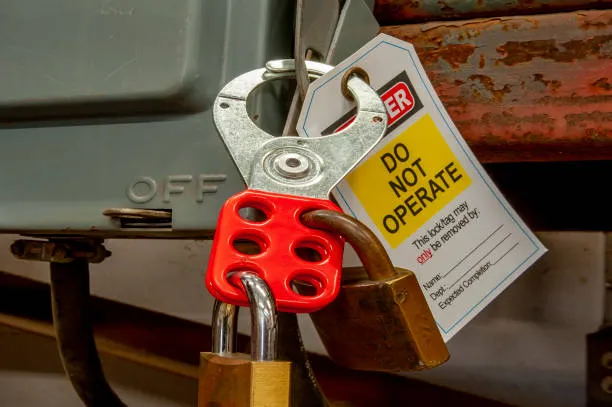
Understanding the nuances of finding just the right lockout safety lock can certainly be a bit mind-boggling. Goodness, we’ve navigated these confusing waters ourselves and fully appreciate how critical it is to secure your home effectively.
In this blog article, we’re going to shed some light on this complex process. We’ll guide you through selecting suitable materials, ensuring durability and exploring keying options that cater specifically to your requirements.
All while considering those rather intricate OSHA Lockout Tagout regulations. Ready for a splendid journey in search of that ideal lock? Let’s dive straight in!

Understanding Lockout/Tagout Regulations
In this section, we will delve into the OSHA Lockout Tagout Standard (1910.147) and emphasise the importance of conducting a thorough risk assessment.
OSHA Lockout Tagout Standard (1910.147)
The OSHA Lockout Tagout Standard (1910.147) outlines specific guidelines to ensure your safety when using machinery or equipment that can release hazardous energy. It’s crucial to comprehend these regulations for preventing injuries, especially if you’re dealing with powered machinery in your home workshop.
The standard emphasises securing machines in the ‘off’ position during repair or maintenance and using a personalised lock and tag until work completion. This approach helps avoid accidental restarts that can lead to severe accidents.
Furthermore, it requires worker training on correct lockout procedures, increasing awareness about potential risks and effective prevention strategies.
Importance of risk assessment
Assessing risks is crucial when it comes to lockout safety. It allows you to identify potential hazards and implement appropriate measures to prevent accidents. By conducting a risk assessment, you can determine the level of danger associated with specific tasks or equipment.
This information helps you select the right lockout safety locks for your needs. Remember, a thorough risk assessment ensures that your home and loved ones are protected from any potential harm or injury.
So, don’t skip this important step in ensuring lockout safety!
Types of Lockout/Tagout Locks
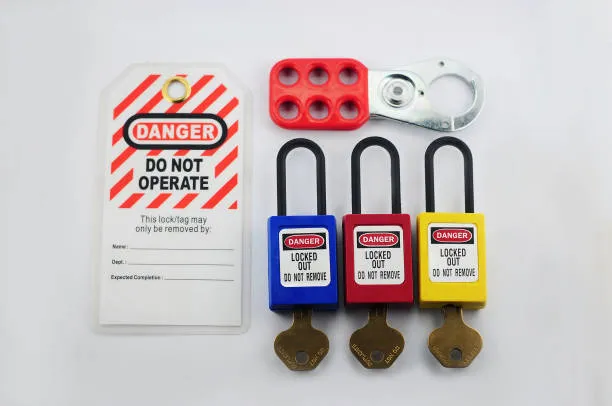
There are various types of lockout/tagout locks available including LOTO padlocks made from different materials such as steel, composite, nylon, aluminium, and brass.
LOTO Padlocks
When choosing a lockout safety lock for your needs, one option to consider is LOTO padlocks. These padlocks are specifically designed for lockout/tagout procedures and provide an effective way to secure equipment and machinery during maintenance or repair.
LOTO padlocks come in different materials such as steel, composite, nylon, aluminium, and brass. When selecting the right lock body material, it’s important to consider factors like durability and the environment where the lock will be used.
By choosing the right LOTO padlock, you can ensure that your lockout procedures are effective and compliant with safety regulations.
Different materials: steel, composite, nylon, aluminium, brass
Lockout safety locks are available in various materials such as steel, composite, nylon, aluminium, and brass. Each material has its own unique properties and advantages to consider when choosing the right lock for your needs.
Steel locks are durable and provide excellent strength, making them ideal for heavy-duty applications. Composite locks offer a lightweight option that is resistant to corrosion and chemicals.
Nylon locks are non-conductive and suitable for electrical lockouts. Aluminium locks are lightweight yet strong, while brass locks offer a balance of durability and aesthetics. Consider the specific requirements of your lockout situation before selecting the most suitable material.
Factors to consider in choosing the right lock body material (durability, environment)
When choosing a lock body material for your safety lock, there are two important factors to consider: durability and environment. The durability of the material will determine how long the lock will last and how well it can withstand external forces.
It’s important to choose a lock body material that is strong and resistant to wear and tear. Additionally, you should also consider the environment in which the lock will be used. If it will be exposed to harsh weather conditions or chemicals, you’ll need a material that can withstand these elements without corroding or degrading over time.
By considering both durability and environment, you can ensure that your safety lock remains reliable and effective in protecting your belongings or property.

Key Features to Consider
When choosing the perfect lockout safety lock, it’s important to consider key features such as personalization and security options, laser engraving for easy identification, lifeguard key charting for efficient key management, and padlock labels for proper labelling and identification.
Keying options for personalization and security
We offer a variety of keying options for your lockout safety locks to provide both personalization and security. You can choose from different key styles, such as keyed-alike or keyed-different, depending on your preference.
Keyed-alike locks use the same key to unlock multiple locks, while keyed-different locks have unique keys for each lock. This allows you to easily manage and access your locked-out equipment or areas.
Additionally, Locksafe's locks come with durable key bodies that are resistant to tampering and picking, ensuring the security of your belongings. With Locksafe's range of keying options, you can customise your lockout safety locks to meet your specific needs while keeping them safe and secure at all times.
Laser engraving for easy identification
We can have laser engraving done on Locksafe's lockout safety locks for easy identification. This is a great feature to consider when choosing the perfect lock for your needs. Laser engraving allows you to personalise your lock with important information such as names, numbers, or even logos.
With easy identification, it becomes much simpler and quicker to locate the right lock when needed, helping to streamline your lockout procedure. So, remember to opt for laser engraving when selecting your safety padlock!
Lifeguard key charting for efficient key management
Lifeguard key charting is a crucial tool for efficient key management when it comes to lockout safety locks. With this feature, you can easily keep track of your keys and ensure they are assigned to the right individuals or departments.
The lifeguard key chart allows you to record who has access to specific lockout padlocks, making it easier to monitor and control the use of these locks. By using lifeguard key charting, you can streamline your key management process and minimise the risk of unauthorised access or misuse of lockout safety locks.
Padlock labels for proper labelling and identification
We all know how important it is to properly label and identify things, especially when it comes to safety. That’s why padlock labels are essential for lockout procedures. These labels provide clear identification of the lock, making it easy to determine who is responsible for the lock and why it is in place.
By using padlock labels, you can ensure that everyone understands the purpose of each lock and follows proper safety protocols. So make sure to use padlock labels for proper labelling and identification in your lockout procedures.
Common Mistakes to Avoid
Skipping the risk assessment is a major mistake that should be avoided, as it helps identify potential hazards and determine the appropriate lockout safety lock for your needs. Ignoring specific requirements, such as OSHA regulations or industry standards, can also lead to serious consequences and compromise worker safety.
Additionally, not considering durability and keying options may result in locks that are easily tampered with or damaged.
Skipping risk assessment
We understand that when it comes to choosing the perfect lockout safety lock for your needs, you may be tempted to skip the risk assessment. However, this is a crucial step that should never be overlooked.
By skipping the risk assessment, you run the risk of not fully understanding the potential hazards and dangers associated with your equipment or machinery. This could lead to serious accidents or injuries.
So take the time to assess the risks involved and choose a lockout safety lock that provides the necessary level of protection for your specific situation. Your safety is worth it!
Ignoring specific requirements
Ignoring specific requirements can lead to serious safety risks. Each lockout/tagout situation is unique, and it’s important to follow the specific guidelines given by regulatory authorities such as OSHA.
By ignoring these requirements, you risk not adequately protecting yourself and others from hazardous energy sources. It’s crucial to take the time to understand and comply with all regulations related to lockout/tagout procedures in order to ensure a safe working environment for everyone involved.
Don’t overlook or dismiss the importance of following these specific requirements – they exist for a reason, and that reason is your safety.
Not considering durability and keying options
When choosing a lockout safety lock, it is important to consider durability and keying options. Durability is crucial because you want a lock that can withstand tough conditions and provide long-lasting protection.
So, take into account the materials used in the lock body and choose one that suits your environment. Additionally, keying options are essential for personalization and security. Look for locks that offer different keying systems such as master keys or keyed alike options.
This will make it easier to manage multiple locks while ensuring maximum security for your needs. Remember, by considering durability and keying options, you can find the perfect lockout safety lock that meets both your practical requirements and peace of mind.
Conclusion
When choosing a lockout safety lock for your needs, it is important to understand the regulations and conduct a risk assessment. Consider the different types of locks available and choose one with the right material for durability in your specific environment. Pay attention to key features such as personalization options, easy identification methods, efficient key management, and proper labelling.
Avoid common mistakes like skipping risk assessments or ignoring specific requirements. Picking the correct lockout safety lock is mission-critical to effectively mitigate workplace hazards & foster safety. Need assistance in selecting the perfect lock? Contact our team at Work Safe Lock Outs. Choose a lock that meets OSHA standards and ensures safety for your home.
Sorting out lockout for your own site?
Describe what needs isolating and we'll help you work out the setup that fits.