

As any Aussie business owner can tell you, workplace safety isn’t just another box to tick – it’s a real dinky-di concern that keeps us up at night. It’s about rolling up the sleeves and facing the issue with that ‘give-it-a-go’ attitude we’re known for. Did you ever stop to think about how something as straightforward as lockout/tagout protocols could be all that stands between your team and thousands of preventable injuries each year? Our yarn here is chock-a-block with insights on how vital these safety locks are for keeping the workmates out of harm’s way. So go on, have a squiz – because when it comes down to it, looking after one another is what truly counts in this big sunburnt country. Let’s get stuck into making safety second nature!
Understanding Lockout/Tagout
The Lockout/Tagout (LOTO) procedure is a crucial safety measure to protect workers from hazardous energy during equipment maintenance. Implementing a LOTO programme not only prevents workplace hazards but also ensures compliance with industrial safety regulations.
What is a Lockout/Tagout (LOTO) procedure?
A Lockout/Tagout (LOTO) procedure is a safety protocol that ensures machines are properly shut down and unable to be started up again prior to the completion of maintenance or repair work.
This practice involves controlling hazardous energy by isolating it from the power source with locks and tags. We place lockout devices on switches, valves, or other energy isolation points to prevent unauthorised use.
Tags are then added to provide information about the lockout and warn against reactivating the equipment.
We enforce these procedures rigorously in our workplaces as they are essential for protecting employees from harm that could be caused by unexpected energisation or startup of machinery.
By adhering strictly to LOTO protocols, we minimise workplace hazards related to equipment servicing. Making this an everyday part of our safety measures contributes not only to employee wellbeing but also helps us stay compliant with industrial safety regulations.
Benefits of implementing a LOTO programme
Implementing a LOTO programme brings significant benefits to businesses. It helps in preventing workplace hazards, protecting workers from injury, and ensuring compliance with safety regulations.
By having a robust Lockout/Tagout procedure in place, businesses can effectively control hazardous energy during equipment servicing and maintenance, thereby reducing the risk of accidents.
Business owners can improve workplace safety measures by implementing a comprehensive LOTO programme. This includes safeguarding workers from potential harm while also complying with legislation requirements, which ultimately contributes to creating a safer working environment for all employees.
Roles and responsibilities in the LOTO process
After understanding the benefits of implementing a LOTO programme, it’s crucial to comprehend the roles and responsibilities involved in maintaining a safe workplace. Employers are accountable for establishing lockout/tagout procedures, providing appropriate training, and regularly reviewing and updating the LOTO programme.
On the other hand, employees must adhere to safety protocols, participate in training sessions, report any malfunctions or hazards promptly, and fully understand the importance of following lockout/tagout procedures to prevent workplace accidents.
Furthermore, supervisors play a pivotal role in ensuring that all workers comply with lockout/tagout requirements during equipment maintenance or servicing. It is essential for everyone involved to take ownership of their specific duties within the LOTO process as part of creating a culture focused on occupational safety and compliance with workplace regulations.
The Importance of Lockout/Tagout Procedures
Implementing lockout/tagout procedures is crucial in preventing workplace hazards and protecting workers from injury. It ensures that hazardous energy sources are properly controlled during equipment maintenance and servicing, reducing the risk of accidents.
Preventing workplace hazards
To prevent workplace hazards, it is imperative to follow strict lockout/tagout procedures. This involves isolating energy sources before performing maintenance or servicing on equipment.
Implementing lockout safety locks ensures that hazardous energy is effectively controlled, minimising the risk of accidents and injuries. Regular training and clear communication about lockout/tagout processes are vital to ensure compliance with legislation and the safety of employees.
Applying safety lockout measures will help in protecting workers from unexpected releases of stored energy during equipment servicing, making it essential to follow standard padlocks usage protocols.
Protecting workers from injury
Implementing lockout/tagout procedures is crucial in safeguarding workers from potential injuries caused by hazardous energy during equipment servicing. By following proper protocols, such as equipment shutdown and isolation, and applying lockout/tagout devices, businesses can significantly reduce the risk of workplace accidents.
Verifying stored energy before restoring equipment to working order also ensures that workers are protected from unexpected releases of hazardous energy.
Business owners should prioritise training employees on lockout/tagout procedures, emphasising the importance of compliance with safety regulations and best practices. This includes thorough preparation, clear communication among teams, and regular equipment maintenance checks.
Best Practices for Lockout/Tagout Procedures
When it comes to implementing lockout/tagout procedures, preparation and notification are key. Equipment shutdown and isolation should be done systematically, while the application of lockout/tagout devices is crucial for worker safety.
Preparation and notification
Before starting any maintenance work, it is crucial to notify all affected employees about the lockout/tagout procedure. Identify and document all energy sources that need to be controlled during the servicing of machinery or equipment.
This includes informing all relevant personnel about which machines will be undergoing maintenance and why the lockout/tagout procedure is necessary. Make sure to communicate clear guidelines for preparing and implementing the lockout/tagout process, as well as notifying workers of potential hazards associated with stored energy.
It’s also essential to provide adequate training on lockout/tagout procedures before initiating any maintenance activities. Additionally, ensure that proper documentation regarding notifications and preparation steps are recorded according to relevant safety regulations.
Equipment shutdown and isolation
Before moving onto the equipment shutdown and isolation phase, it’s crucial to ensure proper preparation and notification have been undertaken. Here are the detailed steps for equipment shutdown and isolation:
- Initiate the shutdown process by following the manufacturer’s guidelines or standard operating procedures.
- Engage all safety mechanisms and switches to ensure complete power – off status of the equipment.
- Isolate energy sources such as electrical, hydraulic, pneumatic, or mechanical systems to prevent unexpected start-up during maintenance.
- Secure isolation points with lockout/tagout devices according to the established procedure and standards.
- Communicate the status of shutdown and isolation clearly to all personnel involved in the maintenance activities.
- Verify that all energy sources are effectively shut off before commencing any servicing or maintenance work.
Applying lockout/tagout devices
Lockout/tagout devices are crucial for ensuring the safety of your workers and compliance with legislation. Here are the key steps to follow when applying lockout/tagout devices:
- Identify all energy sources: Locate and identify all energy sources that need to be locked out or tagged out.
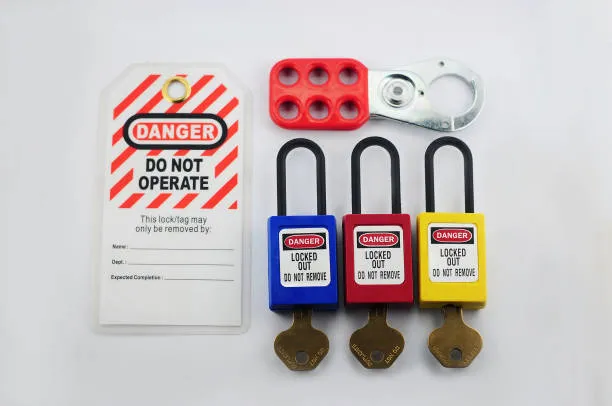
- Select the appropriate devices: Choose lockout/tagout devices suitable for each energy source, such as padlocks, hasps, tags, and lockout boxes.
- Securely attach devices: Affix lockout/tagout devices to the energy isolation points to prevent accidental release of hazardous energy.
- Verify effectiveness: Confirm that the devices effectively isolate the energy sources before commencing servicing or maintenance.
- Communicate lockout/tagout status: Clearly communicate the lockout/tagout status using tags and labels to alert other workers about equipment being serviced or undergoing maintenance.
Checking stored energy and verification
After applying lockout/tagout devices, it’s important to check stored energy and verify that the equipment is properly isolated. This step ensures that no residual energy is left in the system, preventing unexpected releases during servicing or maintenance.
- Identify all potential sources of hazardous energy within the equipment or machinery.
- Use appropriate tools and procedures to release or dissipate stored energy safely.
- Verify the effectiveness of the lockout/tagout by testing the equipment controls and switches.
- Confirm that all energy sources are locked out and isolated before commencing any servicing tasks.
- Conduct a thorough inspection to ensure no residual energy remains in the system.
- Document the verification process as part of the overall lockout/tagout procedure.
Restoring equipment to working order
After the completion of maintenance or servicing, the equipment must be restored to a safe and working condition. This involves a systematic approach to ensure that no hazardous energy is present and that the equipment is ready for operation. Key steps in restoring equipment to working order include:
- Reversing the isolation process following the lockout/tagout procedures with caution and precision.
- Conducting thorough checks to verify that all tools have been removed, safety guards are in place, and any potential hazards are eliminated before restarting the equipment.
- Informing all personnel involved in the maintenance process about the completion of servicing and ensuring that they are clear to re-engage with the equipment.
Real-Life Examples of Successful Lockout/Tagout Implementations
In this section, we will delve into real-life case studies from various industries that have successfully implemented lockout/tagout procedures. These examples will showcase the effectiveness of LOTO programmes in preventing workplace hazards and protecting workers from injury.
Get ready to be inspired by the science behind lockout safety locks and see how they can make a significant difference in ensuring a safe work environment.
Case studies from various industries
We have seen successful implementation of lockout/tagout procedures across various industries. In the automotive sector, a well-established LOTO programme prevented accidental starts and releases during servicing, ensuring worker safety and compliance with legislation.
Meanwhile, in the manufacturing industry, effective lockout/tagout measures mitigated risks associated with hazardous energy sources, reducing workplace injuries significantly. Moreover, in the construction field, rigorous application of LOTO procedures ensured equipment servicing safety and hazard prevention on job sites.
These real-life examples illustrate the tangible benefits of implementing robust lockout/tagout protocols in diverse workplace settings.
The science behind lockout safety locks
Lockout safety locks play a crucial role in workplace safety by effectively preventing the unexpected release of hazardous energy during maintenance or servicing. These locks are designed using robust materials and mechanisms to reliably restrain equipment from activation, keeping workers safe.
The science behind lockout safety locks involves a deep understanding of mechanical engineering principles, material strength, and industrial safety standards. By comprehending these factors, business owners can make informed decisions when selecting lockout safety locks for their facilities, ensuring compliance with legislation and prioritising employee well-being.
Implementing the right lockout safety locks ultimately contributes to creating a secure work environment, reducing the risk of workplace accidents caused by hazardous energy sources.
The Future of Lockout/Tagout and Maintenance Safety
As technology continues to advance, we can expect to see improvements in lockout/tagout procedures, with the potential for more efficient and effective safety measures. SafetyCulture (now trading as Mitti by SafetyCulture) publishes a lockout tagout guide, and its platform covers inspections, training, incident reporting and asset management.
Advancements in technology
We have seen significant advancements in technology with the introduction of smart lockout/tagout systems that allow for remote monitoring and control. These advanced systems not only enhance safety measures but also streamline the overall maintenance process, ensuring compliance with legislation while reducing the risk of hazardous energy-related accidents.
Additionally, technological advancements such as digital lockout procedures and integrated verification processes contribute to a more efficient and accurate lockout/tagout procedure, providing business owners with greater peace of mind in preventing workplace hazards and protecting workers from injury.
As technology continues to evolve, we anticipate further developments in the integration of Internet of Things (IoT) devices into lockout/tagout practices. This could include real-time data analysis to identify potential risks and automate safety procedures, ultimately enhancing workplace safety and contributing to smoother operations within various industries.
Related articles and resources
- “Understanding OSHA’s Control of Hazardous Energy (Lockout/Tagout)” – This article provides a comprehensive overview of OSHA’s requirements for lockout/tagout procedures, ensuring compliance with legislation.
- “Implementing Lockout/Tagout Procedures in Your Workplace” – Explore this resource that outlines detailed steps for implementing effective lockout/tagout procedures to prevent workplace hazards and protect your workers from injuries.
- “Lockout/Tagout Best Practices Case Studies” – This collection of case studies from various industries offers real-life examples of successful lockout/tagout implementations, providing practical insights to enhance your LOTO procedure.
- “Advancements in Technology for Lockout/Tagout Systems” – Stay ahead of the curve by learning about the latest advancements in technology that are revolutionising lockout/tagout processes, enhancing workplace safety.
- “Maintaining Compliance with Lockout/Tagout Verification Processes” – This resource offers guidance on maintaining compliance with lockout/tagout verification processes, ensuring a thorough and effective lockout/tagout procedure.

Conclusion
We have explored the crucial role of lockout safety locks in safeguarding workplaces and employees. The practical approaches and best practices shared can be easily integrated into existing safety protocols. Implementing effective lockout/tagout procedures is paramount for preventing workplace hazards and ensuring employee well-being. These strategies have the potential to yield significant improvements in safety compliance and operational efficiency. For further exploration, readers can access additional resources on advanced technologies and updated industry standards. Let’s work together to create a safer working environment for everyone involved.
Sorting out lockout for your own site?
Describe what needs isolating and we'll help you work out the setup that fits.